


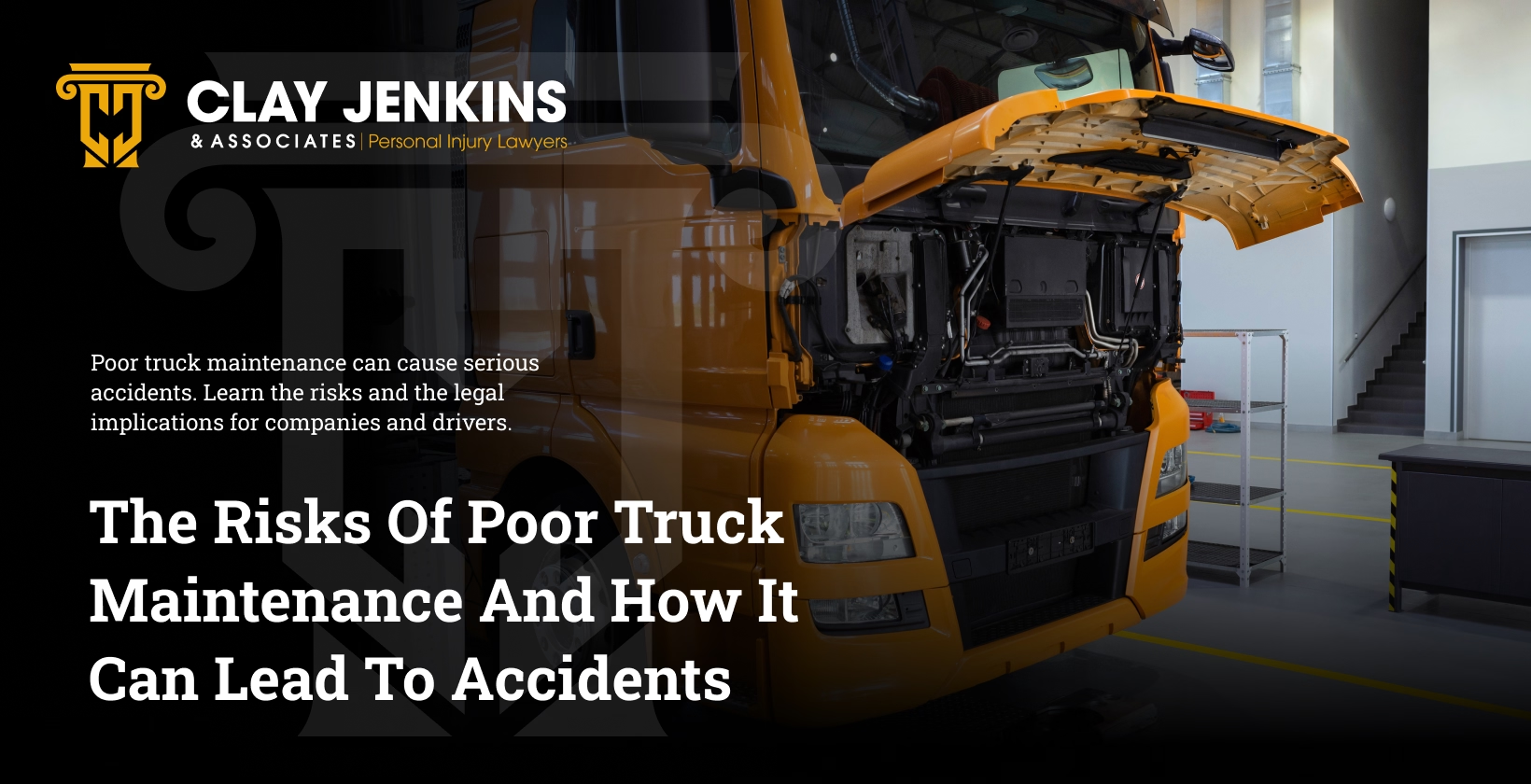
Poor truck maintenance creates devastating accident risks across Texas highways. Truck maintenance failures cause preventable collisions that result in catastrophic injuries and wrongful deaths. Commercial vehicles that operate with defective components endanger everyone sharing the roadway, turning routine travel into life-threatening encounters with negligent trucking companies.
Truck Maintenance and Road Safety
Truck maintenance directly impacts road safety for all motorists traveling throughout Texas. Commercial trucks weigh up to 80,000 pounds, making properly maintained braking systems, tires, and mechanical components absolutely essential for safe operation. When trucking companies neglect routine maintenance obligations, they transform their vehicles into dangerous hazards that threaten innocent drivers, passengers, and pedestrians. Regular inspections and timely repairs prevent mechanical failures that cause severe collisions, yet many carriers prioritize profits over safety protocols.
Federal and state regulations mandate specific maintenance schedules precisely because mechanical defects contribute to thousands of preventable truck accidents annually. The size and weight differential between commercial trucks and passenger vehicles means even minor maintenance failures can produce catastrophic consequences. Ensuring trucks remain roadworthy through consistent upkeep protects communities and prevents the devastating injuries that result from negligent fleet management practices.
Commercial Truck Inspection Requirements
Commercial truck inspection requirements establish comprehensive safety standards that carriers must follow throughout vehicle lifecycles. The Federal Motor Carrier Safety Administration mandates annual inspections covering brake systems, coupling devices, exhaust systems, frames, fuel systems, lighting devices, safe loading, steering mechanisms, suspension, tires, wheels, rims, windshield wipers, and emergency exits. Qualified inspectors must thoroughly examine each component and certify vehicles meet operational safety standards before allowing continued service.
Texas law incorporates these federal requirements while adding state-specific enforcement provisions through the Texas Department of Public Safety. Carriers must maintain detailed inspection reports for each vehicle, documenting when inspections occurred, who performed them, and what defects inspectors identified. Vehicles failing inspections cannot legally operate until qualified mechanics complete all necessary repairs and re-certify the equipment meets safety standards. These rigorous inspection protocols exist specifically to identify maintenance issues before they cause highway accidents.
Federal Maintenance Regulations
Federal maintenance regulations under 49 CFR Part 396 establish mandatory standards governing commercial vehicle upkeep and repair schedules. Motor carriers must systematically inspect, repair, and maintain all vehicles under their control to ensure safe operating conditions at all times. These regulations require carriers to develop written maintenance programs, keep comprehensive records of all repairs and inspections, and immediately address any identified defects before allowing vehicles back into service. Violations of federal maintenance standards expose carriers to substantial civil penalties and potential criminal liability when negligence causes serious injuries or fatalities.
For a free legal consultation, call (972) 938-1234
Maintenance Failures Causing Accidents
Maintenance failures cause devastating accidents through various mechanical defects that compromise vehicle control and occupant safety. Each type of equipment failure presents distinct hazards that endanger motorists.
1. Brake System Failures
Brake system failures represent the most dangerous maintenance defect affecting commercial trucks operating throughout Texas highways. Worn brake pads, defective air brake components, contaminated brake fluid, and improperly adjusted brakes prevent operators from stopping massive vehicles safely. When brakes fail at highway speeds, catastrophic rear-end collisions, jackknife crashes, and multi-vehicle pileups become inevitable consequences of this preventable negligence.
2. Tire Blowouts (Tread Separation)
Tire blowouts occur when carriers neglect proper tire maintenance, rotation schedules, and timely replacement of worn rubber. Tread separation happens suddenly, causing drivers to lose vehicle control while traveling at high speeds. Underinflated tires, excessive wear patterns, age-degraded rubber, and improper load distribution all contribute to catastrophic tire failures that launch trucks across multiple traffic lanes, striking innocent motorists.
3. Steering System Malfunctions
Steering system malfunctions eliminate driver ability to control vehicle direction, creating immediate crash scenarios on busy roadways. Worn tie rod ends, defective power steering components, loose steering linkages, and damaged steering columns all compromise directional control. When steering fails, trucks veer unpredictably into adjacent lanes, oncoming traffic, or off roadways entirely, causing devastating collisions with passenger vehicles.
4. Lighting and Signal Defects
Lighting and signal defects prevent other motorists from seeing trucks or anticipating their movements during nighttime and adverse weather conditions. Inoperative brake lights, turn signals, clearance lamps, and reflective materials create invisible hazards on highways. Defective lighting directly causes rear-end collisions when following drivers cannot detect stopped or slowing trucks ahead, resulting in catastrophic impacts between vehicles.
5. Suspension and Axle Problems
Suspension and axle problems compromise vehicle stability, causing trucks to handle unpredictably during routine driving maneuvers and emergency situations. Broken leaf springs, worn shock absorbers, damaged air suspension systems, and cracked axle components all undermine safe operation. These defects increase rollover risks, especially during curves, lane changes, and sudden braking scenarios that demand stable vehicle dynamics.
6. Coupling Device Failures (Fifth Wheel)
Coupling device failures allow trailers to separate from tractors while traveling at highway speeds, creating catastrophic hazards for surrounding traffic. Improperly maintained fifth wheel assemblies, worn locking mechanisms, defective kingpins, and inadequate lubrication all contribute to detachment incidents. When trailers separate, they become uncontrolled projectiles that strike multiple vehicles, cause massive pileups, and block entire highways.
7. Windshield Wiper Defects
Windshield wiper defects eliminate driver visibility during rain, snow, sleet, and other adverse weather conditions common throughout Texas. Worn wiper blades, defective wiper motors, damaged linkages, and inoperative washer systems prevent operators from seeing roadways, traffic signals, and other vehicles. Operating trucks with defective wipers during inclement weather demonstrates reckless disregard for public safety.
8. Exhaust System Leaks
Exhaust system leaks expose truck operators to dangerous carbon monoxide levels inside vehicle cabs, causing drowsiness, impaired judgment, and loss of consciousness. Corroded exhaust pipes, damaged mufflers, and deteriorated gaskets allow toxic fumes to infiltrate operator compartments. Drivers affected by carbon monoxide poisoning make poor decisions, react slowly to hazards, and may lose consciousness entirely while controlling massive vehicles.
9. Transmission Failures
Transmission failures cause sudden loss of power, unexpected gear changes, and inability to maintain appropriate speeds for traffic conditions. Defective clutches, worn synchronizers, low transmission fluid, and damaged gearing mechanisms all compromise safe vehicle operation. Trucks experiencing transmission problems create hazards when they suddenly slow down in traffic lanes, fail to accelerate from dangerous situations, or lose power on highway entrance ramps.
10. Hydraulic and Oil Leaks
Hydraulic and oil leaks indicate serious mechanical problems that threaten engine operation, brake function, and steering system performance. Leaking fluids create slippery road surfaces that endanger following vehicles while simultaneously degrading critical vehicle systems. Operators who ignore visible leaks demonstrate negligence that often results in complete system failures, leaving trucks stranded in traffic lanes or losing critical functions during operation.
Accident Types from Maintenance Failure
Maintenance failures produce specific crash patterns that result in catastrophic injuries and substantial property damage throughout Texas highways.
1. Jackknife Crashes (Brake Failure)
Jackknife crashes occur when trailer brakes fail or malfunction, causing trailers to swing sideways and form dangerous angles with tractor units. Defective brake systems prevent synchronized stopping between tractor and trailer components. The resulting jackknife motion sweeps across multiple traffic lanes, striking numerous vehicles and creating massive highway blockages that trap innocent motorists in devastating collision scenarios.
2. Rollovers (Suspension Defects)
Rollovers happen when defective suspension systems fail to maintain vehicle stability during routine driving maneuvers and emergency avoidance actions. Broken springs, worn shock absorbers, and compromised axle assemblies eliminate the stability needed to navigate curves, lane changes, and sudden braking events. Rolling trucks crush adjacent passenger vehicles, spill hazardous cargo, and block entire highways for extended periods.
3. Rear-End Collisions (Faulty Brake Lights)
Rear-end collisions result directly from inoperative brake lights that prevent following drivers from detecting stopped or slowing trucks ahead. Defective lighting systems create invisible hazards during nighttime driving and adverse weather conditions. When brake lights fail, unsuspecting motorists collide with stopped trucks at full highway speeds, causing catastrophic injuries and fatalities that proper maintenance would prevent entirely.
4. Multi-Vehicle Pileups (Tire Blowouts)
Multi-vehicle pileups often begin when sudden tire blowouts cause trucks to lose directional control and veer across multiple traffic lanes. Exploding tires launch trucks into adjacent vehicles while depositing dangerous debris throughout active roadways. The initial collision triggers chain-reaction crashes involving numerous vehicles, trapping motorists in devastating pileup scenarios that result from preventable maintenance negligence.
5. Head-On Collisions (Steering Loss)
Head-on collisions occur when complete steering system failures eliminate driver ability to control vehicle direction entirely. Trucks experiencing steering malfunctions cross center medians and enter oncoming traffic lanes, creating unavoidable collision scenarios. The massive size and weight of commercial vehicles produce catastrophic damage during head-on impacts, frequently resulting in multiple fatalities and life-altering injuries for surviving occupants.
Click to contact our personal injury lawyers today
Maintenance Responsibility
Maintenance responsibility for commercial trucks involves multiple parties who share legal obligations to ensure vehicle safety throughout operational lifecycles. Federal and Texas state regulations distribute these duties among drivers, trucking companies, maintenance facilities, and equipment manufacturers. Understanding who bears responsibility for specific maintenance tasks becomes crucial when investigating collision causes and establishing negligence in truck accident litigation.
Driver Pre-Trip Inspection Duties
Commercial drivers must complete thorough pre-trip inspections before operating vehicles each day, identifying visible defects that compromise safe operation.
- Drivers must visually inspect brake systems, checking for worn pads, damaged lines, proper adjustment, and adequate air pressure in pneumatic brake components.
- Operators must examine all tires for proper inflation, adequate tread depth, visible damage, irregular wear patterns, and objects embedded in rubber.
- Drivers must test all lighting systems, including headlights, brake lights, turn signals, clearance lamps, and reflective materials to ensure visibility to other motorists.
- Operators must check fluid levels for engine oil, coolant, power steering, windshield washer, and hydraulic systems, noting any visible leaks or contamination.
- Drivers must inspect coupling devices, ensuring fifth wheel assemblies lock properly, kingpins remain secure, and safety chains or cables attach correctly.
- Operators must test windshield wipers and defrosters, confirming proper operation before encountering adverse weather conditions that demand clear visibility during operation.
Trucking Company Obligations
Trucking companies bear primary responsibility for implementing comprehensive maintenance programs that keep their commercial vehicle fleets operating safely throughout Texas highways.
- Companies must establish written maintenance schedules for each vehicle, specifying inspection intervals, preventive maintenance tasks, and component replacement timelines based on manufacturer recommendations.
- Carriers must employ or contract with qualified mechanics who possess necessary skills, certifications, and equipment to perform thorough inspections and competent repairs.
- Companies must maintain detailed records documenting all inspections, repairs, parts replacements, and identified defects for each vehicle throughout its operational service life.
- Carriers must immediately remove defective vehicles from service until qualified mechanics complete necessary repairs and certify safe operating conditions have been restored.
- Companies must implement quality control systems ensuring mechanics perform work correctly, use appropriate replacement parts, and follow manufacturer specifications for all repairs.
- Carriers must monitor ongoing vehicle performance through driver reports, roadside inspection results, and periodic safety audits that identify maintenance program deficiencies requiring correction.
Third-Party Maintenance Liability
Third-party maintenance facilities that contract with trucking companies may share liability when negligent repairs or inspections contribute to highway accidents. Independent mechanics, maintenance shops, and dealership service departments owe duties to perform work competently and identify safety defects during vehicle inspections. When these facilities fail to meet industry standards, they can face liability for accidents caused by negligent maintenance practices, improper repairs, substandard parts installation, or failure to identify obvious safety defects during routine service.
Texas law allows injured parties to pursue claims against maintenance providers who breach their professional duties through negligent workmanship. Establishing third-party mechanic liability requires proving the maintenance facility performed work negligently, that negligence directly caused vehicle defects, and those defects proximately caused the collision and resulting injuries. Comprehensive investigation of maintenance records, repair invoices, and industry standard practices becomes essential when evaluating potential third-party liability claims against maintenance facilities.
Can Manufacturers Be Liable for Defects?
Manufacturers can face strict liability when defective parts or design flaws contribute to commercial truck accidents throughout Texas roadways. Equipment manufacturers, parts suppliers, and component producers all bear responsibility for ensuring their products perform safely under normal operating conditions. When manufacturing defects, design deficiencies, or inadequate warnings create hazardous conditions, injured parties may pursue product liability claims against manufacturers regardless of maintenance practices.
Texas product liability law establishes that manufacturers can be held liable when defective products reach consumers in unreasonably dangerous conditions. This applies to brake system manufacturers producing defective components, tire manufacturers whose products experience tread separation, steering system suppliers providing faulty parts, and any other equipment manufacturers whose products fail during normal vehicle operation. Product liability claims often run parallel to maintenance negligence claims, allowing injured parties to pursue compensation from multiple responsible parties.
Complete a Free Case Evaluation form now
Warning Signs of Poor Maintenance
Warning signs of poor maintenance often appear visibly before mechanical failures cause devastating crashes, yet trucking companies frequently ignore obvious indicators of inadequate vehicle care.
1. Visible Fluid Leaks
Fluid leaks underneath parked trucks indicate serious mechanical problems affecting engine operation, brake systems, power steering, or hydraulic components. Pooling liquids demonstrate negligent maintenance practices that allow critical systems to deteriorate, threatening complete failure during highway operation.
2. Worn or Bald Tires
Worn or bald tires with insufficient tread depth demonstrate carriers prioritizing cost savings over roadway safety and occupant protection. Inadequate tire tread eliminates traction needed during wet weather, emergency braking, and routine vehicle control, indicating systematic maintenance negligence.
3. Unusual Brake Noises
Unusual brake noises including grinding, squealing, or hissing sounds indicate worn brake pads, damaged rotors, or air brake system leaks. These audible warnings demonstrate carriers operating vehicles with known defects rather than completing necessary repairs before collisions occur.
4. Cracked Windshields
Cracked windshields compromise driver visibility and structural integrity, indicating carriers neglect basic safety equipment maintenance that prevents proper hazard recognition. Operating trucks with damaged windshields demonstrates disregard for regulations requiring unobstructed forward visibility at all times.
5. Inoperative Lights
Inoperative lights on commercial trucks create invisible hazards during nighttime and adverse weather conditions, preventing other motorists from detecting vehicles. Burned-out bulbs, damaged lenses, and defective wiring all indicate systematic neglect of lighting system maintenance that prevents safe operation.
6. Rust on Critical Components
Rust on critical components including frame members, suspension parts, and brake system elements indicates long-term maintenance neglect and structural deterioration. Corroded components fail unexpectedly during vehicle operation, demonstrating carriers allowed vehicles to deteriorate beyond safe operating condition.
7. Loose Trailer Connections
Loose trailer connections between tractors and trailers indicate improper maintenance of coupling devices, fifth wheel assemblies, and securing mechanisms. Visible movement at connection points demonstrates inadequate inspection practices and imminent detachment risks that endanger all highway traffic.
Maintenance Records in Lawsuits
Maintenance records become critical evidence in truck accident lawsuits, documenting whether carriers fulfilled their safety obligations or operated defective vehicles negligently. These comprehensive documents reveal inspection histories, repair timelines, identified defects, and corrective actions taken throughout vehicle operational lives. Experienced truck accident lawyers obtain and analyze these records to establish negligence claims against carriers who prioritize profits over proper vehicle maintenance and public safety.
Required Documentation for Carriers
Required documentation for carriers includes comprehensive maintenance records mandated by federal regulations under 49 CFR Part 396. Motor carriers must maintain inspection reports, repair invoices, parts replacement records, and mechanic certifications for each vehicle in their fleet. These documents must detail when inspections occurred, what defects inspectors identified, what repairs mechanics completed, and when vehicles returned to service after maintenance work. Federal law requires carriers to retain these records for specific time periods, ensuring regulators and injured parties can review complete maintenance histories when investigating accident causes.
The Texas Department of Transportation enforces additional state-level documentation requirements that supplement federal standards. Carriers must produce these records upon request by law enforcement, regulatory agencies, and injured parties pursuing legal claims. Failure to maintain proper documentation raises strong presumptions of negligence and can result in substantial civil penalties against trucking companies who systematically disregard their record-keeping obligations.
Obtaining Company Records
Obtaining company records requires strategic legal action through formal discovery procedures that compel carriers to produce comprehensive maintenance documentation.
- Attorneys issue preservation letters immediately after accidents, legally obligating trucking companies to preserve all relevant maintenance records, inspection reports, and repair invoices that might otherwise be destroyed, altered, or lost through routine document retention policies.
- Legal teams serve formal document requests through discovery procedures, specifically demanding inspection logs, repair orders, parts invoices, mechanic certifications, and internal communications regarding identified vehicle defects and deferred maintenance decisions.
- Lawyers conduct depositions of company maintenance supervisors, mechanics, and safety directors, questioning witnesses under oath about maintenance practices, inspection procedures, and decisions to operate vehicles despite known defects.
What Logs Reveal About Negligence
What logs reveal about negligence often proves carriers knew about dangerous defects yet continued operating trucks anyway, prioritizing delivery schedules over highway safety. Maintenance records frequently document repeated failures of the same components, indicating systematic problems that carriers failed to address adequately. Inspection reports showing identified defects alongside continued vehicle operation demonstrate conscious disregard for safety regulations and public welfare.
Records revealing extended intervals between scheduled maintenance, deferred repairs, and incomplete inspections all establish negligence patterns that contributed to accident causation. Documents showing carriers operated vehicles under out-of-service orders, ignored mechanic recommendations, or used substandard replacement parts strengthen negligence claims substantially. Careful analysis of these logs often reveals carriers systematically prioritized cost savings over safety compliance, establishing the reckless conduct necessary for enhanced damages in truck accident litigation.
Do Expert Witnesses Use These Records?
Expert witnesses extensively utilize maintenance records when analyzing accident causation and establishing carrier negligence in truck accident litigation. Mechanical engineers review inspection logs to determine whether defects existed before collisions occurred and whether proper maintenance would have prevented accidents. Trucking industry experts evaluate whether carriers followed federal safety regulations, implemented adequate maintenance programs, and took appropriate corrective actions when inspectors identified defects.
These specialists compare defendant maintenance practices against industry standards, identifying deviations that demonstrate negligence. Expert testimony based on maintenance records helps juries understand technical mechanical issues and connects maintenance failures directly to collision causation. Without comprehensive maintenance documentation, establishing mechanical failure causation becomes significantly more difficult in truck accident lawsuits.
Out-of-Service Orders Explained
Out-of-service orders are official declarations issued by law enforcement or safety inspectors that prohibit commercial vehicles from operating until identified defects are repaired and re-certified safe. These orders result from roadside inspections revealing serious mechanical deficiencies, safety violations, or regulatory non-compliance that create immediate public hazards. Vehicles placed out-of-service cannot legally move except to reach repair facilities, and drivers or carriers who violate these orders face severe civil and criminal penalties.
Texas law enforcement and federal motor carrier safety officials issue out-of-service orders when inspections reveal critical violations including defective brakes, steering system failures, tire defects, lighting violations, or coupling device problems. Operating trucks under active out-of-service orders demonstrates willful disregard for safety regulations and establishes strong evidence of negligence when accidents occur. Maintenance records showing carriers repeatedly received out-of-service orders for similar defects prove systematic maintenance failures that endanger highway safety.
Common Out-of-Service Violations
Common out-of-service violations identify the most frequent mechanical defects that inspectors determine create immediate collision risks requiring vehicle removal from Texas highways.
- Brake system violations including brake adjustments exceeding regulatory limits, air system leaks, contaminated brake fluid, or brake drum cracks comprise the most frequent out-of-service defects nationwide.
- Tire violations encompassing insufficient tread depth below minimum requirements, flat tires, tire damage exposing belts or cords, and improper tire sizes for vehicle applications regularly trigger removal orders.
- Steering system violations including excessive free play, loose steering components, damaged tie rods, or power steering fluid leaks eliminate safe vehicle control and mandate immediate service.
- Lighting violations involving inoperative brake lights, turn signals, headlights, or clearance lamps create dangerous visibility hazards that inspectors cannot allow to continue during operation.
Roadside Inspections and Enforcement
Roadside inspections and enforcement activities conducted by Texas Department of Public Safety troopers and federal motor carrier safety inspectors identify maintenance violations before they cause catastrophic accidents. These inspections examine critical vehicle systems including brakes, tires, steering, lighting, exhaust, coupling devices, and load securement. Inspectors use standardized protocols to evaluate whether vehicles meet safety requirements and can identify numerous defects during comprehensive Level I inspections.
Violations discovered during roadside inspections result in citations, fines, and out-of-service orders that prevent continued operation until repairs are completed. Inspection data becomes part of carriers’ safety records, affecting their overall safety ratings and insurance costs. Repeat violations demonstrate systematic maintenance problems that regulators monitor closely, potentially leading to fleet-wide inspections and increased enforcement scrutiny.
Recoverable Damages from Maintenance Accidents
Recoverable damages from maintenance accidents encompass comprehensive compensation for injuries, losses, and suffering caused by carriers’ negligent vehicle maintenance practices.
- Medical expenses including emergency treatment, hospitalization, surgeries, rehabilitation, medications, assistive devices, and ongoing care for catastrophic injuries resulting from maintenance failures.
- Lost wages covering income lost during recovery periods, diminished earning capacity from permanent disabilities, and lost employment opportunities caused by crash-related injuries.
- Property damage reimbursement for vehicle repairs, total loss values, personal property destroyed in collisions, and rental expenses during repair periods.
- Pain and suffering compensation addressing physical pain, emotional distress, mental anguish, loss of enjoyment, and diminished quality of life from injuries.
- Loss of consortium damages compensating spouses for lost companionship, affection, support, and intimate relationships destroyed by catastrophic injuries or deaths.
- Punitive damages potentially available when evidence proves carriers operated trucks with gross negligence, willful misconduct, or conscious disregard for public safety.
Negligent Maintenance in Lawsuits
Negligent maintenance claims require proving carriers breached their duties to maintain vehicles safely, that breach directly caused the collision, and plaintiffs suffered damages from the accident. Establishing these elements demands comprehensive investigation into maintenance records, inspection logs, repair histories, and industry standards. Attorneys must demonstrate carriers knew or should have known about defects, had opportunities to repair them, yet continued operating dangerous trucks anyway.
Evidence supporting negligent maintenance claims includes internal company emails discussing deferred repairs, budget documents showing inadequate maintenance funding, driver complaints about vehicle defects, repeated inspection violations, and expert testimony explaining how proper maintenance would have prevented accidents. Texas law allows injured parties to recover full compensation when establishing carriers failed to maintain vehicles according to federal safety regulations and reasonable care standards.
Is the Company Liable for Outsourced Work?
Companies remain liable for outsourced maintenance work when independent contractors perform negligent repairs or inspections on their behalf. Trucking carriers cannot avoid responsibility by delegating maintenance duties to third-party facilities. Federal regulations make motor carriers ultimately responsible for ensuring all maintenance work meets safety standards, regardless of who performs the actual repairs. When carriers choose incompetent mechanics, fail to supervise outsourced work, or ignore obvious defects identified by contractors, they bear liability for resulting accidents alongside the negligent maintenance providers.
Steps After a Suspected Maintenance Crash
Steps after suspected maintenance crashes must preserve critical evidence and protect legal rights following collisions potentially caused by negligent vehicle maintenance practices.
- Seek immediate medical evaluation for all injuries, ensuring healthcare providers document collision-related trauma that establishes damages in subsequent legal claims against negligent carriers.
- Photograph truck damage, visible mechanical defects, fluid leaks, tire conditions, brake components, and accident scenes before evidence disappears or gets altered.
- Obtain driver information, company details, insurance data, vehicle identification numbers, and contact information for all witnesses who observed the collision or its aftermath.
- Request police investigation with officer notation of visible mechanical defects, maintenance issues, or equipment violations observed at accident scenes documented in official reports.
- Contact experienced truck accident attorneys immediately who can issue preservation orders, obtain maintenance records, and investigate mechanical failures before evidence disappears completely.
- Avoid discussing fault, admitting liability, or signing documents from insurance companies before consulting legal counsel who protects your financial recovery rights.
- Document all accident-related expenses including medical bills, repair costs, lost wages, and other damages that establish full compensation claims against responsible parties.
Contact Us Today
Clay Jenkins & Associates represents victims seriously injured in truck accidents caused by negligent maintenance failures throughout Texas. The firm’s experienced legal team investigates mechanical defects, obtains maintenance records, and holds carriers accountable for operating dangerous vehicles. Schedule a free consultation with a truck accident attorney at Clay Jenkins & Associates today.
Call or text (972) 938-1234 or complete a Free Case Evaluation form